Why MIMO Antenna Count Matters More Than Router Specs in Dense Wireless Environments
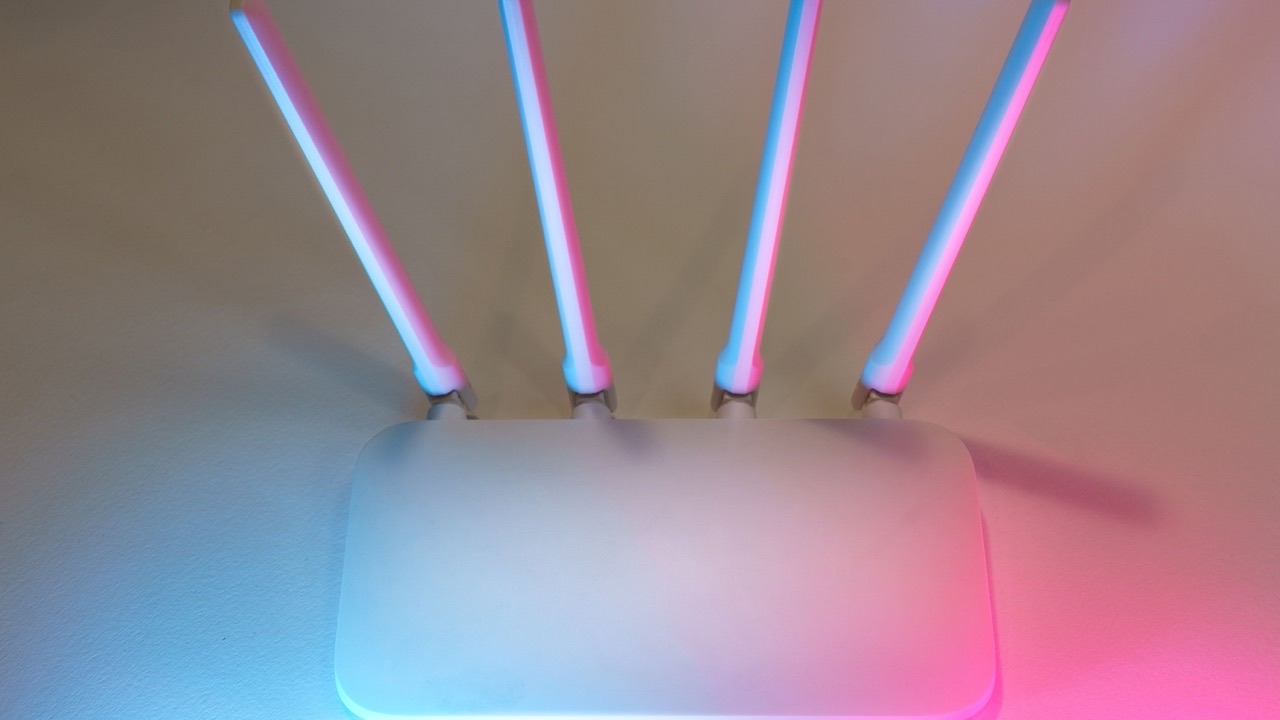
Walk into most discussions about wireless network performance and the conversation centers on the router: which chipset, what theoretical throughput, how many square feet it covers. These are reasonable things to care about, but in environments where the wireless challenge actually gets difficult — dense office spaces, multi-unit residential buildings, warehouses with dozens of connected devices — the antenna configuration tends to matter more than the router spec, and it gets a fraction of the attention.
MIMO antenna design determines how a wireless system handles the conditions that make single-antenna systems degrade: reflected signals, competing transmissions, and the congestion that comes from many devices competing for the same spectrum at the same time.
What MIMO actually does and why more antennas change the math
MIMO — Multiple-Input Multiple-Output — uses multiple antennas simultaneously, both transmitting and receiving. The fundamental benefit isn’t simply stronger signal; it’s the ability to use the multipath propagation that characterizes indoor environments constructively rather than destructively.
In a standard single-antenna system, a signal that bounces off a wall and arrives at the receiver slightly delayed interferes with the direct-path signal. This multipath interference degrades signal quality and reduces throughput. In a MIMO system, the same reflected signals are treated as distinct spatial streams — the receiver uses the differences in what each antenna sees to separate and decode multiple data streams that were transmitted simultaneously in the same frequency space.
The spatial multiplexing gain from MIMO is proportional to the minimum of the number of transmit and receive antennas. A 4×4 MIMO system — four transmit antennas and four receive antennas — can theoretically support four simultaneous spatial streams, quadrupling throughput compared to a single-stream system using the same spectrum. In practice, the achievable gain depends on the physical separation between antennas, the channel characteristics, and the degree of spatial independence between the streams.
Antenna count vs. claimed router speeds
Router specifications routinely list aggregate theoretical throughputs that assume conditions that don’t exist in real deployments: optimal client distance, no interference from adjacent networks, clients with matching MIMO capability, and spectrum that isn’t shared with other devices. The number on the box describes the ceiling in an empty room.
In a dense office with sixty devices connected, twenty active video calls, and neighboring floors running their own networks in overlapping channels, the performance determinants shift. Channel congestion means devices spend significant time waiting for clear transmission opportunities. Interference from overlapping networks reduces signal quality for all devices. Multipath propagation from furniture, partitions, and people creates a complex channel environment.
In these conditions, the MIMO antenna configuration determines how gracefully the system handles competing demands. A 4×4 MIMO access point with well-designed antenna spacing can serve more simultaneous clients at usable data rates than a higher-specced 2×2 system, because it has more spatial degrees of freedom to separate clients and manage interference. The antenna configuration sets the ceiling on how many independent spatial paths the system can exploit, and that ceiling becomes the binding constraint in dense environments before raw processing power does.
The physical requirements for spatial independence
MIMO’s spatial multiplexing depends on the antennas seeing sufficiently different channel conditions — if all antennas receive essentially the same signal, the spatial streams become correlated and the multiplexing gain collapses. Achieving adequate spatial independence requires physical antenna separation and, in some cases, polarization diversity.
For 2.4GHz signals with a wavelength of approximately 12.5cm, minimum antenna spacing for spatial independence is typically half a wavelength — about 6cm. For 5GHz signals at approximately 6cm wavelength, the spacing requirement is 3cm or less, which allows more antennas to be fitted into the same physical footprint.
This is one reason why 5GHz and 6GHz MIMO implementations can be denser than 2.4GHz implementations of the same device size, and why WiFi 6 and WiFi 6E access points can incorporate more effective MIMO antennas than their predecessors at equivalent form factors. The shorter wavelength of higher-frequency bands allows more antennas to be placed with adequate separation in a practical enclosure.
Polarization diversity as a complementary approach
Beyond physical spacing, polarization diversity adds another dimension to spatial independence. An antenna that transmits and receives horizontally polarized signals is largely independent from one transmitting and receiving vertical polarization, even when physically co-located. This allows MIMO systems to use both spatial and polarization diversity simultaneously, increasing the effective number of independent channels available in environments where space constraints limit physical separation.
In practice, modern MIMO implementations combine spatial separation and polarization diversity to maximize independence between streams. Ceiling-mount access points in commercial buildings frequently use cross-polarized antenna elements — one oriented vertically, one horizontally — with physical separation between element pairs. This configuration maintains stream independence even in environments with heavy physical constraints on antenna placement.
What this means for network infrastructure procurement
When evaluating wireless access points or MIMO antenna systems for dense deployments, the relevant questions center on the antenna configuration rather than the headline throughput spec. How many independent spatial streams can the system support? What is the antenna spacing and whether it achieves adequate separation at the target frequencies? Does the design use polarization diversity, and across which frequency bands?
For high-density deployments — enterprise office floors, stadium concourses, hospitality environments with hundreds of simultaneous users — the access point count and placement strategy needs to be informed by the MIMO stream capacity of the antenna system, not just the coverage footprint.
A MIMO antenna for 5G WiFi LTE designed with adequate element separation and polarization diversity delivers meaningful capacity gains in dense environments. A system with the same theoretical throughput rating but inadequate antenna configuration hits its practical limits well before the spec sheet suggests it should.
The router spec describes what the silicon can process. The antenna configuration determines how much of that processing capacity the air interface can actually deliver.