How to Evaluate a Coated Rubber Timing Belt Manufacturer Before Placing a Long-Term Supply Order
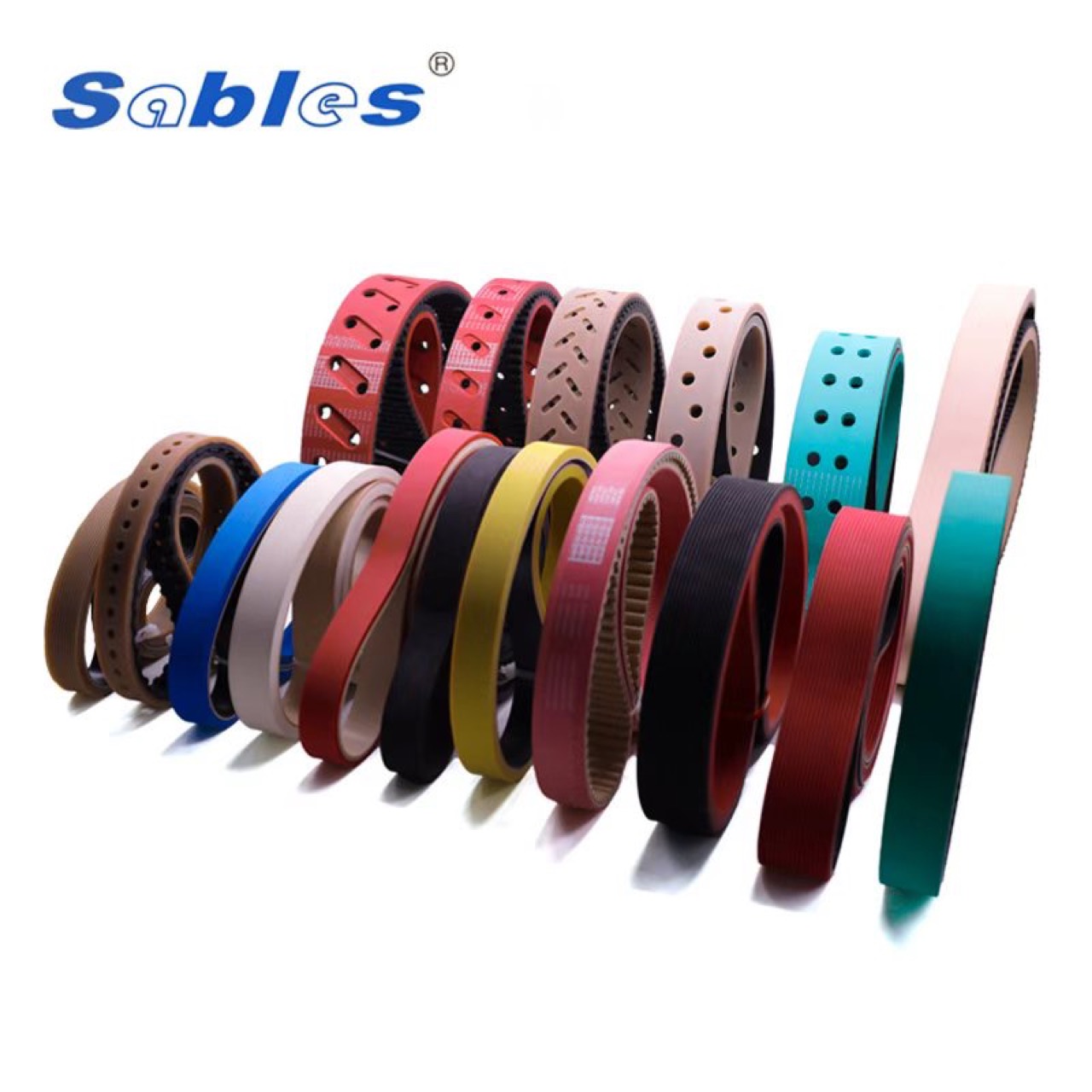
Coated rubber timing belts occupy a narrow segment of the power transmission market where the coating isn’t cosmetic — it’s load-bearing. The coating has to maintain adhesion through flex cycles, resist whatever the application throws at it chemically and thermally, and not compromise the dimensional stability that makes a timing belt function as a timing device. A manufacturer who applies coating to a standard rubber belt without addressing these requirements produces a product that looks like a coated timing belt and functions like one until the application stresses it, at which point it fails faster than either a standard belt or a well-made coated one would.
Evaluating a manufacturer before committing to a supply relationship involves getting past the product description and finding out what’s actually behind it.
What to Ask About the Coating Process
The first question that separates manufacturers with real coating capability from those without it is simple: what’s your coating process, and what are the bond strength specifications between the coating and the base belt?
A manufacturer who can answer this specifically — adhesion test method, typical values, acceptance threshold, what happens to the coating at minimum bend radius under specified tension — is working with a defined process. One whose answer stays at the level of “we use high-quality coatings” or “our products meet all standards” hasn’t defined the process well enough to control it.
Bond strength is the critical variable in coated belt durability. A coating that’s well-adhered to the belt will outlast the base belt in most applications. A coating that’s inadequately bonded delamInates under flex fatigue, often in the tooth root area where the belt bends most acutely around small-diameter sprockets. This failure mode appears as coating peeling or chipping rather than as obvious tooth failure, and it’s typically mistaken for a surface problem rather than a manufacturing process problem.
The second process question is about coating thickness control. Coatings on timing belts have to maintain dimensional tolerance, because the belt’s tooth geometry and overall thickness affect how it meshes with the sprocket and how it sits in the housing. A coating that varies in thickness from one belt to the next, or from one end of a belt to the other, introduces dimensional variation that affects drive performance and can shorten belt life by creating stress concentrations at thickness transitions.
Requesting Samples and What to Test
Sample testing before a supply commitment is standard practice for industrial components. For coated rubber timing belts, the tests worth running go beyond dimensional inspection.
Adhesion testing on the sample belt — using a peel test appropriate to the coating geometry — gives a number to compare against the manufacturer’s stated specification. If the manufacturer can’t provide a specification, that’s significant information about how well-defined the process is. If the tested value doesn’t match the stated specification, that’s different significant information about whether the process is under control.
Chemical resistance testing should match the specific substances the belt will encounter in service. A belt tested for oil resistance and specified for an oil-present environment still needs to be tested with the actual oils involved, at the actual concentrations and temperatures, for a relevant exposure duration. Generic chemical resistance data from a coating datasheet tells you something; compatibility with your actual application tells you more.
Flex fatigue on a sample belt, if the volume and timeline allow for it, reveals coating adhesion under cyclic stress in a way that static adhesion testing doesn’t. The relevant question is whether the coating is still fully adhered after a defined number of flexion cycles over the minimum bend radius the belt will see in service. Manufacturers who run dynamic adhesion testing as part of their own quality process will have this data; those who don’t will have to discuss what it would take to generate it.
Documentation and Lot Traceability
A supply relationship for a component that goes into equipment your customers operate runs on documentation. When something fails in the field, the ability to trace the product back to a specific production lot, check that lot’s quality records, and determine whether the failure is within the population or an outlier is what distinguishes a supplier who can help you resolve the problem from one who can only express sympathy.
Ask what documentation comes with a production order. At minimum, a manufacturer with controlled processes can provide: the belt specification to which the lot was manufactured, the coating specification applied, the lot-level quality data (dimensional inspection results, adhesion test results), and a certificate of conformance signed by someone accountable for its accuracy.
The lot traceability question is related: if you report a field failure and provide the lot number from the belt, can the manufacturer pull up the production records for that lot? Manufacturers with real quality systems can do this. Those with nominal quality systems often discover gaps in their records when the question is actually asked.
The Factory Visit Question
For long-term supply relationships at meaningful volume, a factory visit or third-party audit before finalizing the arrangement is not an unusual request. The manufacturer’s response to that request tells you something independent of what their documentation says.
A manufacturer who welcomes a visit, facilitates the logistics, and doesn’t restrict what the auditor can see is operating with a transparency that’s consistent with good process control. A manufacturer who creates obstacles to visits, limits what can be seen, or deflects the request with documentation packages is signaling something about the gap between their represented capability and their actual practice.
What to look at during a visit: the coating application equipment and its maintenance state, whether the process parameters are recorded during production rather than reconstructed afterward, whether there’s incoming inspection on the coating materials, and whether the quality team can produce the lot records for recent production on request.
A Coated Rubber Timing Belt Manufacturer who can hold up to this evaluation is a supplier worth building a long-term relationship with. The evaluation takes time before the order, but it’s shorter than the time required to manage quality problems, field failures, and supply disruptions after a supply relationship with the wrong manufacturer is already in place.