How to Read BSPT Thread Dimensions and Match Them to Your Fitting Application
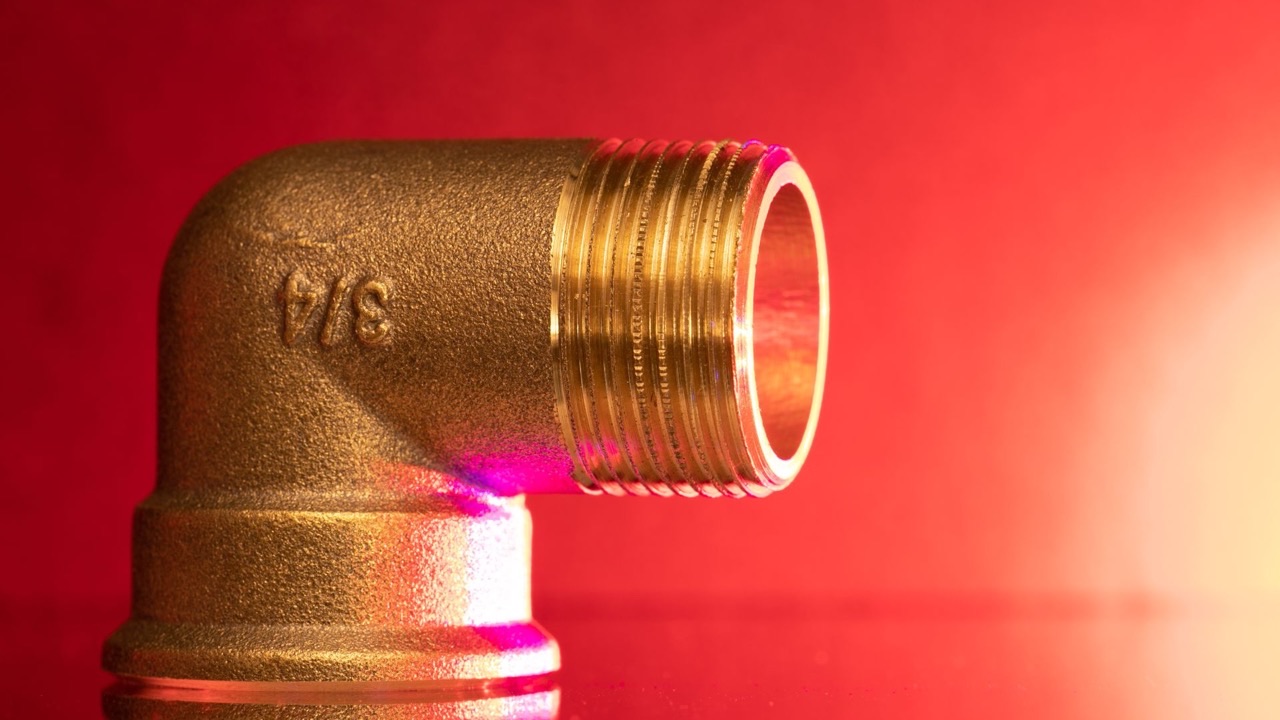
BSPT threads appear on pressure gauges, hydraulic fittings, pneumatic valves, and pipe connections across industrial and plumbing applications worldwide. The standard is well-established, but the dimension tables that describe it can be confusing if you haven’t worked with them before — particularly when you’re trying to match a fitting to an existing port or confirm that two parts will assemble correctly.
Here’s how to read those dimensions and actually use them.
The nominal size is not the actual thread diameter
This is the single most common source of confusion with BSPT — and with BSP threads generally. A 1/2 BSPT fitting does not have a thread diameter of 0.5 inches. The nominal size refers to the approximate bore diameter of the pipe the fitting was historically designed to connect to, not to the thread itself.
The actual major diameter of a 1/2 BSPT thread is approximately 20.955 mm (0.8248 inches). The nominal size is just a label — a shorthand that identifies the fitting family. When you see a spec sheet listing nominal sizes from 1/8 to 4 inch BSPT, those numbers describe which fittings belong to which size family, not the thread geometry directly.
Once you understand this, reading a BSPT dimension table becomes straightforward. The columns you actually use for fitting selection and gauging are the major diameter, the pitch, and the thread form angle — not the nominal size label.
Thread form: the 55° angle and what it means
BSPT follows the Whitworth thread form, which uses a 55° included angle at the thread flanks. This is different from UN/UNF threads (60°) and metric threads (also 60°). The practical consequence is that BSPT fittings are not interchangeable with NPT, metric, or UN threads of similar nominal size — the thread form is different and they will not engage correctly even if the pitch happens to be close.
When checking a thread with a gauge or thread identifier, the 55° flank angle is the first confirmation that you’re looking at a BSP or Whitworth thread rather than something else.
Pitch and TPI across the BSPT size range
The pitch — distance between thread crests — decreases as fitting size increases in the BSPT standard. Smaller fittings have finer threads:
1/8 BSPT: 28 TPI (threads per inch), pitch 0.907 mm 1/4 BSPT: 19 TPI, pitch 1.337 mm 3/8 BSPT: 19 TPI, pitch 1.337 mm 1/2 BSPT: 14 TPI, pitch 1.814 mm 3/4 BSPT: 14 TPI, pitch 1.814 mm 1 inch BSPT: 11 TPI, pitch 2.309 mm 1-1/4 and 1-1/2 BSPT: 11 TPI, pitch 2.309 mm 2 inch BSPT: 11 TPI, pitch 2.309 mm
The TPI matters when you’re threading a port or cutting threads on pipe — using the wrong TPI will produce threads that appear to engage for a few turns but won’t achieve the proper thread contact or sealing.
The taper: how BSPT creates its seal
The “T” in BSPT stands for taper. The thread form tapers at 1 in 16 on the diameter (approximately 1°47’ half-angle). As a tapered external thread is screwed into a tapered internal port, the thread flanks compress against each other and create a mechanical seal.
This is the key difference between BSPT (tapered) and BSPP/G (parallel, sometimes called BSP parallel). Parallel BSP threads require an O-ring face seal or a sealing compound to achieve leak-free assembly; tapered BSPT threads rely on the interference fit between the taper forms. The two types use the same nominal size designations and may appear interchangeable, but they seal by different mechanisms.
When reading dimension data, confirm whether you’re looking at BSPT (tapered) or BSPP (parallel) specifications. The thread diameters differ slightly because BSPT dimensions are specified at a reference plane partway up the taper.
How to match BSPT thread dimensions to your fitting application
The practical sequence for fitting selection:
First, identify the thread type on the existing port or fitting — BSPT, BSPP, NPT, or metric. A thread gauge confirming TPI and form angle is the most reliable method. If you’re working from documentation, confirm whether the drawing calls out BSP taper or parallel explicitly.
Second, find the nominal size by measuring the OD of the external thread (or the thread bore of an internal thread) and cross-referencing against a dimension chart. Remember that the OD measurement won’t match the nominal size label directly.
Third, confirm the pitch by counting threads over a known length or using a pitch gauge. This catches cases where two fittings appear dimensionally similar but have different TPI — which happens at 1/4 and 3/8 BSPT (both 19 TPI) versus 1/2 and 3/4 BSPT (both 14 TPI).
Fourth, confirm the application requirement. A hydraulic system at high pressure needs thread engagement depth within the standard range and appropriate sealant or tape applied correctly. A pneumatic system may have different sealing practices. A low-pressure water fitting has more tolerance for imperfect assembly than a hydraulic line.
Working with drawings and dimension tables
Industrial equipment drawings referencing BSPT typically call out the nominal size and the standard (ISO 7/1 for tapered BSP, ISO 228 for parallel BSP). If a drawing calls “G1/2” without the taper designation, that’s typically parallel BSP. If it calls “R1/2” or “Rc1/2”, that’s tapered — the “R” prefix is the ISO 7/1 designation for BSPT.
The letter prefixes matter when ordering: R (external taper), Rc (internal taper), and G (parallel) have different dimension specifications despite sharing the same nominal size label. Ordering “1/2 BSP” without specifying taper or parallel may result in receiving the wrong fitting for the application.