The Real Cost of Cheap Replacement Batteries — Why Compatibility Lists and Price Don't Tell the Whole Story
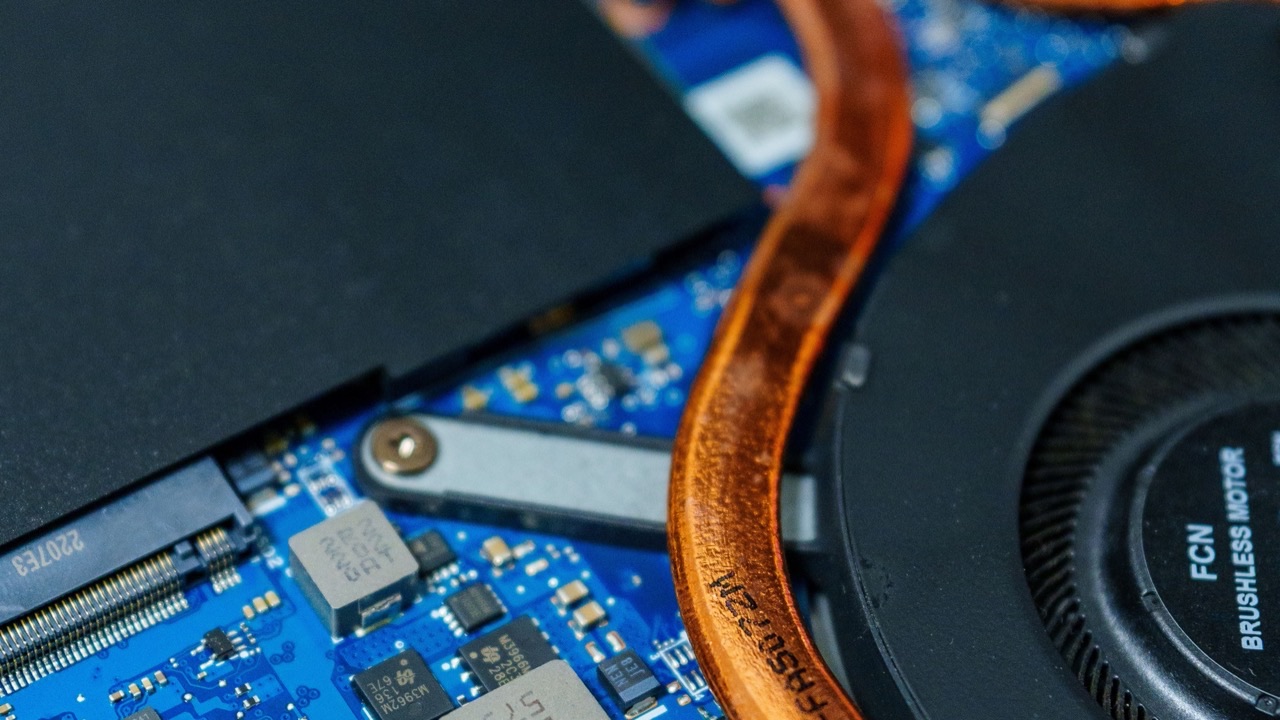
A replacement battery that fits the connector and lists the right model number in its compatibility table seems like a safe purchase. The price is significantly lower than the OEM option, the listing says it’s compatible, and the specs — voltage, capacity in milliamp hours — appear to match. The problem is that compatibility lists and spec sheets don’t capture the variables that determine whether a battery is actually safe and performs as advertised. Those variables are in the cell chemistry, the battery management circuitry, and the manufacturing quality controls — none of which are visible in a product listing.
The real cost of a cheap replacement battery shows up later: in shorter runtime than advertised, in accelerated degradation over the first few charge cycles, and occasionally in failure modes that damage the device or, in the worst cases, create safety hazards. Understanding why this happens makes it possible to distinguish a genuinely good value from a battery that will cause problems.
The cell quality problem
The rated capacity of a replacement battery — 5000mAh, 6000mAh, whatever the listing claims — is only meaningful if the cells inside the battery pack actually deliver that capacity under real operating conditions. Generic replacement batteries frequently use cells sourced from lower-tier manufacturers with less consistent cell production than the Tier 1 suppliers used in OEM batteries.
Lower-tier cells have wider tolerance in their actual capacity versus rated capacity. A cell rated at 3000mAh may deliver anywhere from 2600mAh to 3100mAh depending on where it falls in the manufacturer’s distribution. OEM suppliers typically sort cells by capacity and use only cells within a tight tolerance range. Generic battery manufacturers may not sort at all, meaning the actual capacity of the battery pack can vary significantly from unit to unit — and the advertised capacity may represent the best-case scenario rather than the typical one.
Cell consistency also affects longevity. A battery pack contains multiple cells wired in series and parallel. If those cells have different internal resistances and slightly different capacities, the pack management system has to balance charging and discharging across mismatched cells. This accelerates degradation in the weakest cells, which degrades the overall pack faster than a pack of well-matched cells would.
The battery management circuit problem
A laptop battery isn’t just a collection of cells — it contains a battery management system (BMS) that monitors cell voltage, temperature, and current, and communicates with the laptop to report state of charge and health. The BMS protects the cells from overcharge and over-discharge, both of which damage lithium-ion cells and can create safety hazards.
Cheap replacement batteries sometimes use simplified or lower-quality BMS circuits that implement protection functions less accurately or less reliably. An overcharge protection circuit that triggers at 4.25V instead of 4.2V may not seem significant, but consistently charging cells above their rated voltage accelerates electrolyte oxidation and reduces cycle life substantially. Over-discharge protection that triggers at 2.8V instead of 3.0V similarly stresses cells in ways that accumulate over repeated cycles.
The communication between the battery and the laptop is a separate concern. Modern laptops use the battery’s BMS to report state of charge, health, and remaining runtime. A battery with inaccurate BMS calibration reports these values incorrectly — the laptop shows 40% charge when the battery is actually at 25%, or the health readout shows a full-capacity battery that’s actually at 70% of rated capacity. These inaccuracies don’t just create inconvenience; they mean the laptop can’t accurately predict when the battery will die, leading to unexpected shutdowns.
The capacity inflation problem
Battery capacity ratings in the generic replacement market are frequently exaggerated. A replacement battery listed as 6000mAh may contain cells that deliver 4500mAh under real load conditions. This isn’t an edge case — it’s a known and widespread practice in low-cost battery manufacturing, where the listed capacity may represent the theoretical maximum under ideal conditions rather than the actual delivered capacity under normal laptop operation.
The practical result: the replacement battery’s runtime is noticeably shorter than expected, and shorter than the OEM battery it replaced. Buyers conclude the replacement battery must be defective, but defective implies deviation from a standard — in this market, the inflated rating is the standard practice rather than the exception.
Testing actual capacity requires discharging the battery under controlled load conditions, which is beyond what most buyers can verify. This is why sourcing from a supplier who can provide cell certification documentation and quality test reports matters more than the listed specification.
The safety problem
Lithium-ion battery failures — thermal runaway, swelling, fire — are rare but not theoretical. They occur when cells are overcharged, over-discharged, physically damaged, or have manufacturing defects that allow internal short circuits. A well-designed battery with quality cells and a functioning BMS is designed to prevent all of these failure modes.
A poorly designed battery with off-spec cells and a minimal BMS eliminates or weakens these protections. The probability of failure in any individual unit may still be low, but the consequences of failure in a device being used on a person’s lap, in a bag, or at a desk are significant enough that the risk profile of cheap replacement batteries deserves explicit consideration.
This is the cost that doesn’t appear in the price comparison: not just worse performance, but a risk profile that differs from an OEM or quality-tested replacement battery in ways that aren’t disclosed in the product listing.
What to look for in a genuine alternative
A replacement battery that represents genuine value rather than just a lower price will have verifiable cell sourcing (cells from Tier 1 manufacturers like Panasonic, Samsung SDI, LG Chem, or Sony), third-party testing certification for the BMS and overall pack safety, and accurate capacity ratings supported by test data rather than marketing claims.
The price differential between a genuine quality replacement and a low-cost generic is real, but so is the performance and safety differential. A batterieprofessionnel supplier who can provide documentation on cell sourcing and battery testing is charging for something specific — cells that deliver their rated capacity consistently, a BMS that protects those cells accurately, and test verification that the pack as assembled meets its specifications. That’s the cost of a battery that performs as advertised rather than one that just claims to.