What Happens to FRP Gratings After Ten Years in Heavy Industrial Service
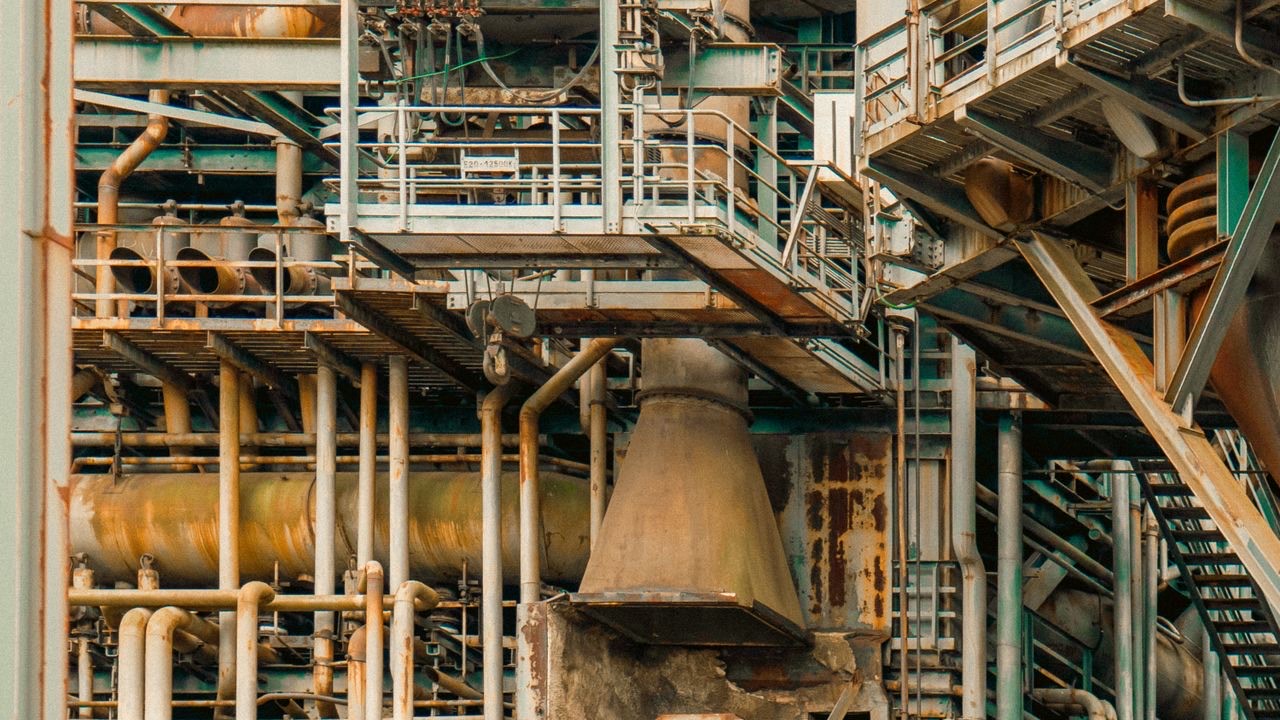
Most FRP grating products are marketed with service life claims of 25 to 30 years. These figures come from actual installation track records in various industrial environments, and they’re generally credible — FRP grating in the right application with appropriate installation really does last a long time without major structural degradation.
What those headline figures don’t tell you is what the grating actually looks like at year ten, what’s happened to its surface, whether its load capacity has changed, and what maintenance has been required to keep it in service. For anyone making a long-term procurement decision, the ten-year picture is more useful than the claimed maximum service life.
Surface appearance: what changes and what doesn’t
The most visible change in FRP grating after extended outdoor service is surface chalking. UV radiation breaks down the resin at the surface layer, releasing fine particles that give the surface a dull, chalky appearance. This is primarily a cosmetic change rather than a structural one — the underlying resin and fiber are protected by the depth of material below the surface layer — but it’s the change that’s most immediately obvious when you look at aged FRP grating beside new material.
Color also fades over time in outdoor UV exposure. FRP grating is manufactured with pigmented resin, and the pigments in most standard formulations are not UV-stable indefinitely. After ten years of outdoor service, the original color has typically faded noticeably. Again, this is cosmetic rather than structural, but it’s worth knowing for applications where appearance matters.
UV-stabilized resin formulations are available that slow the chalking and fading processes. For outdoor applications where appearance is a consideration, the cost premium for UV-stabilized resin is usually modest relative to the total project cost and worth including in the specification.
Structural integrity: the honest picture
The structural performance of FRP grating after ten years in industrial service depends heavily on three factors: the initial specification quality, the installation conditions, and whether the application exposed the grating to anything outside the design parameters.
For grating that was correctly specified for the loads and environment, installed with proper support spacing and edge treatment, and used within its design parameters, the structural integrity at year ten is close to what it was at installation. The glass fibers don’t fatigue in the same way that metals do under cyclic loading, and the resin doesn’t corrode or oxidize. What you install is largely what you have ten years later in terms of structural capacity.
The caveats are impact damage and edge condition. Impact from dropped tools or heavy equipment can damage FRP grating locally — the impact resistance of fiberglass composites is good but not unlimited. Impact damage that’s visible as surface cracking or crazing should be assessed to determine whether it’s cosmetic or whether it has compromised the structural section. In most cases, isolated impact damage is local, but significant impacts or repeated damage in the same area warrant closer inspection.
Cut edges are the other structural vulnerability. FRP grating that was cut in the field to fit around penetrations or to irregular shapes exposes the glass fiber cross-sections at the cut edge. If those edges weren’t sealed at installation, moisture penetration at the cut is the main pathway for long-term degradation. Properly sealed cut edges show minimal change at ten years; unsealed cut edges in wet environments may show discoloration, fiber blooming, or in severe cases resin deterioration at the edge zone.
How the service environment affects ten-year condition
The operating environment is the single biggest variable in ten-year condition. FRP grating in a dry indoor application with no chemical exposure and moderate traffic loads at year ten typically looks nearly new structurally, with only cosmetic surface changes if the installation is indoors.
The same grating in a coastal or marine atmosphere shows more surface UV degradation but typically remains structurally sound because the chemistry that drives steel corrosion — electrochemical oxidation driven by moisture and chlorides — doesn’t affect glass fiber composites in the same way.
Chemical exposure is where the ten-year outcome varies most. Grating specified correctly for the chemical environment — vinyl ester resin in a sulfuric acid environment, for example — holds up well at ten years. Grating specified with the wrong resin system for the actual chemical exposure shows visible degradation: resin dissolution, fiber exposure, and in severe cases structural softening. This is why resin selection against the actual chemical exposure profile matters so much at the specification stage.
The fastener and support system at ten years
FRP grating itself often outlasts the hardware used to secure it. Saddle clips, hold-down bolts, and support structure in corrosive environments can corrode even when the grating they’re securing is still in good condition. At a ten-year inspection, it’s common to find grating panels that are structurally sound but secured with fasteners that have corroded to the point of needing replacement.
The practical implication is that the fastener system should be specified for the same corrosive environment as the grating. Stainless steel fasteners and clips, or FRP clip systems, avoid the mismatch between a long-lasting grating system and shorter-lived hardware.
Comparison with steel at the same age
The ten-year comparison between FRP and steel grating in a corrosive environment is where the service life claims become most concrete. Steel grating in a chemical processing or coastal environment at year ten has typically been repainted at least twice, may have had sections replaced, and requires an inspection that focuses on rust penetration and structural section loss.
FRP grating in the same environment at year ten, assuming correct original specification, is largely maintenance-free other than periodic inspection. The maintenance cost differential over ten years is often significant enough to offset the higher initial cost of FRP over steel, which is the economic basis for the material’s adoption in corrosive service.
For facilities evaluating FRP gratings for planned maintenance or replacement projects, looking at the actual ten-year track record of comparable installations — same environment, similar loads, similar resin specification — gives a more reliable basis for the decision than manufacturer claims alone.
Inspection checklist at years five and ten
A practical inspection protocol for FRP grating at the five and ten year marks covers: surface condition (chalking, color change, any visible resin cracking or crazing), cut edge condition (discoloration, fiber exposure, resin condition), impact damage (surface cracks or deformation from known or suspected impacts), fastener condition (corrosion, tightness), and deflection under known load if there’s any concern about structural change.
Most FRP grating installations pass this inspection at ten years with minor findings — typically cosmetic surface changes and fastener condition — rather than structural concerns. When structural findings do appear, they’re almost always traceable to an installation condition that wasn’t within the original design parameters: overloading, chemical exposure outside the resin system’s range, or cut edges that weren’t sealed at installation.